Docket #: S23-401
Cellular Therapies Targeting T-antigen in Solid Tumors
Stanford researchers in Prof. Engleman and Reticker-Flynn's labs have created a novel cell therapy that targets the T-antigen, a prominent tumor-specific antigen, by leveraging the high avidity interactions between lectins and glycans. The therapy is designed to enhance treatment for patients with a wide range of metastatic carcinomas unresponsive to current immunotherapies or targeted treatments.
The field of cancer therapy has seen advancements, particularly in immunotherapy, yet a significant number of patients remain unresponsive to available treatments. Identifying and targeting specific tumor antigens remains a challenge due to the possibility of cancer cells evading immune detection through immunoediting. Furthermore, tumor-localized immune cells are often insufficient, and a systemic immune response is necessary for effective anti-tumor immunotherapy. Current therapies have not adequately addressed these issues, presenting an unmet need for treatments targeting key tumor features, such as the T-antigen.
The inventors have developed an innovative cell-based therapy that targets the T-antigen, a key tumor-associated carbohydrate antigen (TACA), enhancing the potential treatment of a wide range of metastatic carcinomas. The technology addresses the core challenge in current cancer therapies, where patients either do not respond robustly or do not have a durable response to immunotherapy. This solution incorporates a novel lectin-based targeting domain, leveraging high avidity interactions between lectins and glycans, yielding a robust anti-tumor response. This innovative therapy reduces the possibility of cancer cells escaping treatment and disrupts metastatic tolerance by targeting lymph node metastases.
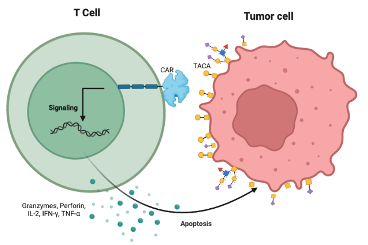
Figure Description: Schematic of cell therapy against glycosylation motifs
Stage of Development:
Pre-clinical: Established in mouse models
Applications
- Cancer immunotherapy
- Treatment for metastatic solid malignancies
Advantages
- Novel targeting: First cell therapy to target T-antigen in a peptide-agnostic manner
- Enhanced efficacy: Leverages high avidity interactions resulting in robust anti-tumor response compared to traditional therapies
- Durable response: Targets functional mediators of disease progression rendering evolutionary tumor escape less likely
- Reducing the metastatic capacity of the tumor
- Metastasis disruption: Potential to target metastases and enhance the overall immune response to immunotherapy
- Specificity: Targets aberrant glycosylation seen in tumors, reducing harm to healthy tissues
Related Links
Patents
- Published Application: WO2025111484
Similar Technologies
-
Rapid Programmable CAR-T Cell Engineering Platform Using Antigen-Targeted Lentiviral Delivery for Same-Day In Vivo and Ex Vivo T Cell Modification S25-016Rapid Programmable CAR-T Cell Engineering Platform Using Antigen-Targeted Lentiviral Delivery for Same-Day In Vivo and Ex Vivo T Cell Modification
-
CD93-targeting CAR-T to treat AML S18-273CD93-targeting CAR-T to treat AML
-
Engineering Spatially Targeted Cell Therapies via Metabolite Sensing GPCRs S24-049Engineering Spatially Targeted Cell Therapies via Metabolite Sensing GPCRs