Docket #: S20-441
Epicardial and endocardial catheter system
Stanford researchers have developed a self-aligning two-sided (epicardial and endocardial) ablation system for treatment of atrial fibrillation (AF). Although several ablation systems for treatment of AF exist, this new two-sided system reliably achieves full transmural lesions, is easier and faster to use, and has a closed loop feedback system. This invention can potentially provide more effective treatment as compared to the systems used today.
Related Technology
Stanford docket S19-081 "Biopolar Magnetically Self Aligned Sheath for Ablation"
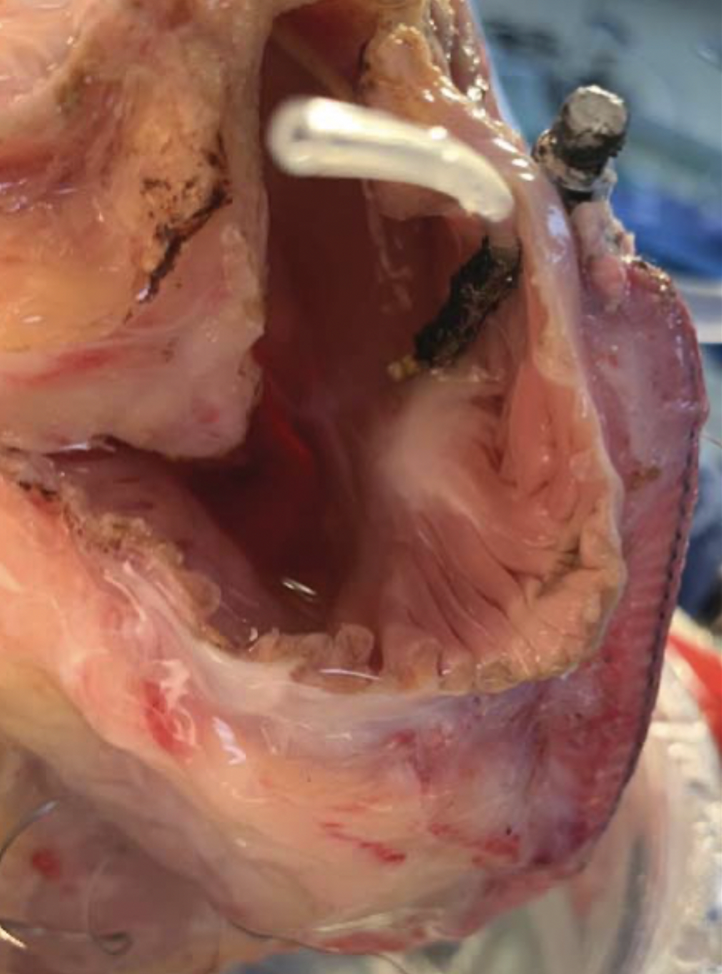
Figure description - Example design of self-aligning two-sided (epicardial and endocardial) ablation system. Image credit:
Wang Lab
Stage of Development
Applications
- Arrhythmia/AF ablation
Advantages
- Full thickness ablation across the cardiac tissue
- Perfect alignment of the epi and endo ablator catheters across the tissue where bipolar energy is delivered only across the tissue at the target
- Automated, self-alignment due to series of magnets
- Closed loop feedback system - series of ablation elements in communication with endo elements to adjust ablation intensity (time) depending on the tissue thickness
- Reduced procedure time by ~80-90%
- Simplified hardware by elimination of vacuum system
- Optimized components
Patents
- Published Application: WO2022093840
- Published Application: 20260151181
Similar Technologies
-
Model-less method for controlling continuum and redundant robots S13-079Model-less method for controlling continuum and redundant robots
-
Ultrathin Flexible Multilead Electrocardiogram Bandage for Arrythmia Diagnosis and Monitoring S19-061Ultrathin Flexible Multilead Electrocardiogram Bandage for Arrythmia Diagnosis and Monitoring
-
Biopolar Magnetically Self Aligned Sheath for Ablation S19-081Biopolar Magnetically Self Aligned Sheath for Ablation