Docket #: S25-298
Improved Bone Anchor System for Surgical Tracking
Stanford Medicine researchers in The Stuart Goodman Lab have developed a bone anchor system for surgical tracking that is easier to use and decreases complications caused by conventional knee or hip replacement bone pin anchors. Modern (knee, hip) joint replacement surgeries use temporary bone-anchored pins to track bone position in 3D space during operations. Post-surgery pin removal leaves holes in the bones that elevate complication risk (ranging from 0.1 to 5% within 3 months of post operation), including pin site fracture and catastrophic bone fracture. The Stuart Goodman lab developed a single cortex anchor hook design that reduces post anchor removal bone footprint, preserves more bone structure integrity, reduces fracture risk, and minimizes interference with surgical bone preparations and implant placement. This bone anchor system is easier to apply, reposition, and remove, and can be used with a variety of modular robotic arthroplasty components, for temporary or permanent fixation to a bone structure.
Stage of Development: Prototype
Proof of concept testing has been successfully performed in cadavers. Researchers are partnering to produce a sterile packaged shelf ready product.
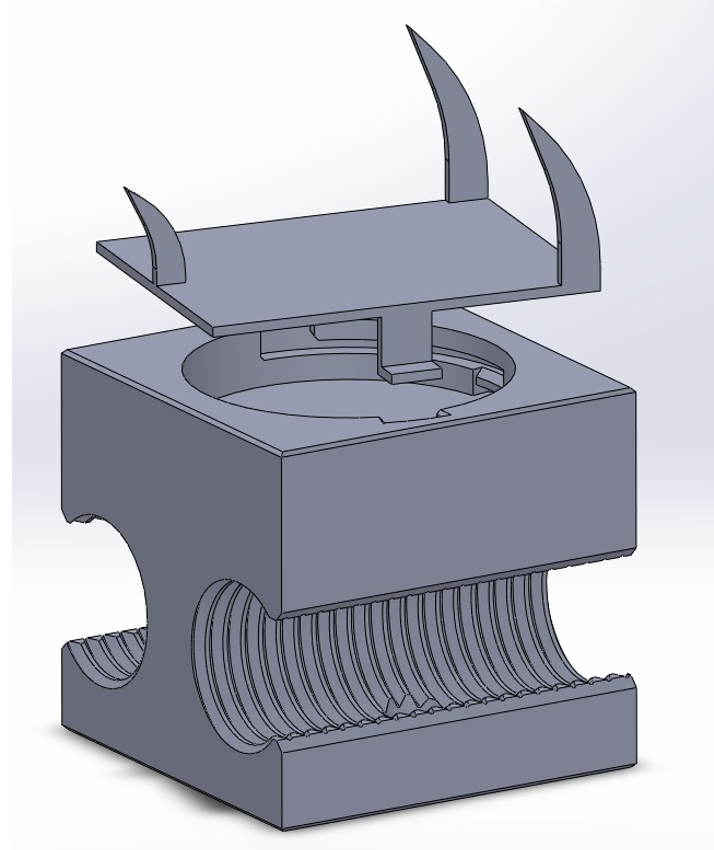
Schematic - Bone Anchor System for Surgical Tracking
(Image courtesy the Stuart Goodman Lab)
Applications
- Orthopedic surgical tool for joint replacements and implants
- Potential Orthopedic bone attachment implant design
Advantages
- Decreases complication rates – preserves more bone integrity, reduces fracture risk
- Easier to use - hook design is easier to place, remove, and reposition without specialized power tools
- Reduces post anchor removal bone footprint
Related Links
Similar Technologies
-
Customized Load-Bearing and Bioactive Functionally-Graded Implant for Treatment of Osteonecrosis S15-027BCustomized Load-Bearing and Bioactive Functionally-Graded Implant for Treatment of Osteonecrosis
-
Orthopedic Surgical Instrumentation for Joint Replacement S25-569Orthopedic Surgical Instrumentation for Joint Replacement
-
Use of recombinant osteopontin (SPP1) protein for prevention of foreign body response S23-249Use of recombinant osteopontin (SPP1) protein for prevention of foreign body response