Docket #: S25-347
Self-conforming, Easy-to-use Pelvic Organ Prolapse Support
Pelvic organ prolapse affects 3-6% of US women, with 50% lifetime risk, especially following vaginal childbirth. Traditional pessaries provide mechanical support but can be uncomfortable, can compromise vaginal tissues, and require professional sizing, fitting, insertion and removal for periodic cleaning.
Stanford Mussallem Center for Biodesign researchers have developed an inflatable, space-filling pelvic organ prolapse support system that addresses challenges of traditional pessaries, including placement, removal, and customized fit. The system (figure 1) consists of an applicator with built-in pump, a biocompatible inflatable chamber made of medical-grade silicone, and a string-like component for inflation/deflation and easy removal. The device customizes upon inflation to accommodate anatomical variations and various prolapse types (cystocele, rectocele, uterine/vaginal vault) and potentially incontinence. Designed as disposable for hygienic temporary use, it can be self-applied or placed with assistance in home, public, or clinical settings. This personalized prolapse management system provides a comfortable solution and user independence.
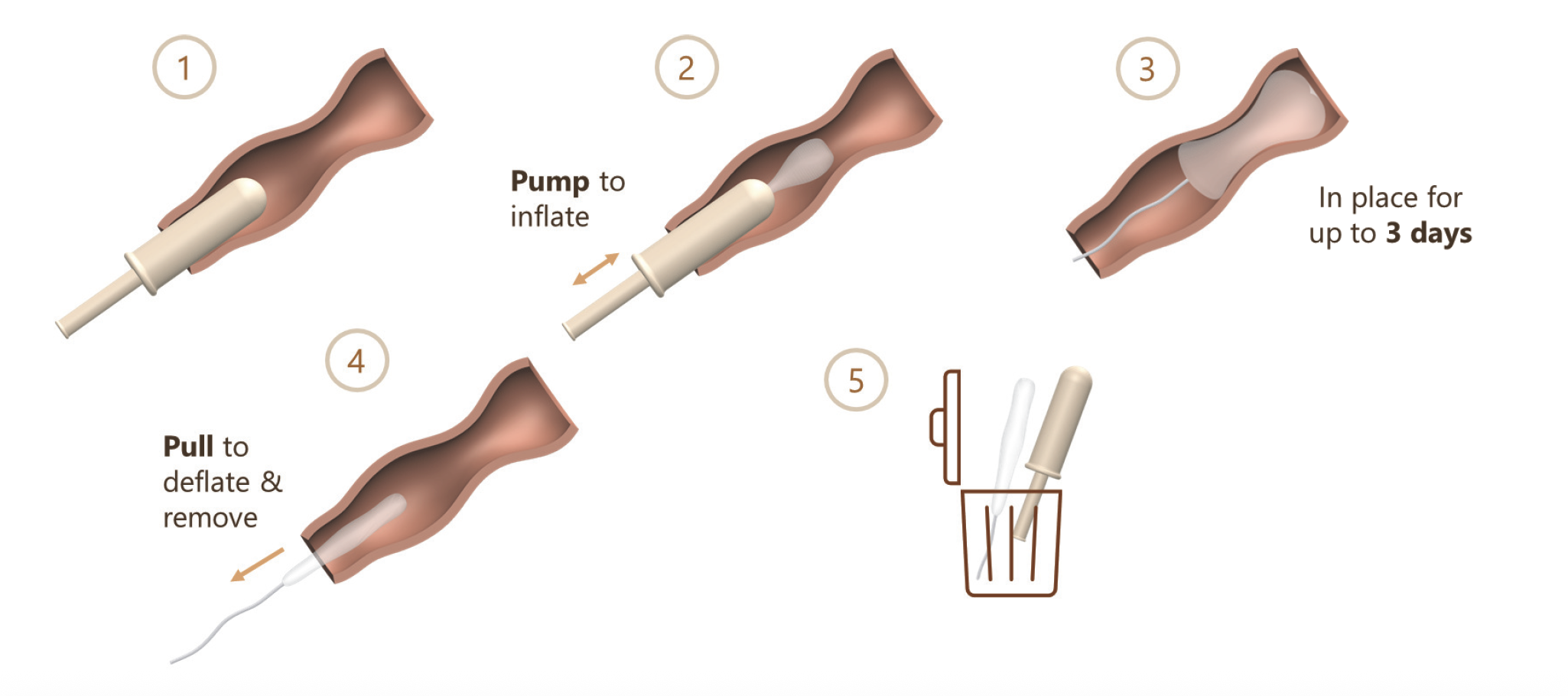
Pelvic Organ Prolapse Support System
Image courtesy of Elevanse
Stage of Development
Prototype
Applications
- Pelvic organ prolapse support
- Potential urinary incontinence treatment
Advantages
- Adapts to the patient's anatomy for comfortable, hygienic support of prolapsed organs while maintaining tissue health
- Disposable, hygienic, temporary
- Easy, self-administered placement and removal - can be removed for sex and menstruation
- Versatile - treats various prolapse types with a single design
Related Links
Similar Technologies
-
Ultrasound Heat Therapy Device for Preventing Perineal Tears During Labor and Delivery S23-250Ultrasound Heat Therapy Device for Preventing Perineal Tears During Labor and Delivery
-
A Novel Peptide to Boost Epithelial Barrier Protection and Prevent Infections S19-265A Novel Peptide to Boost Epithelial Barrier Protection and Prevent Infections
-
Quick and robust LINAC commissioning and beam data modeling S19-188Quick and robust LINAC commissioning and beam data modeling