Docket #: S25-113
DART-Met: Dynamic AI-Driven Raman Techniques for Biomarker monitoring in Metabolic disorders
Stanford University researchers in the Bamm and Durmus Labs have developed the Dynamic AI-Driven Raman Techniques (DART) platform, which integrates electrochemical enhancement with surface-enhanced Raman spectroscopy for real-time, sensitive, specific, reproducible biomarker detection in complex samples, essential for early and accurate disease diagnosis. Chronic liver disease is on the rise worldwide, driven in part by the global obesity epidemic and diabetes. Current diagnostic options are problematic: liver function tests (LFTs) lack sensitivity and specificity, non-invasive imaging techniques have limited early-stage disease detection, MRI's cost and availability restrict access, and liver biopsy is invasive and costly.
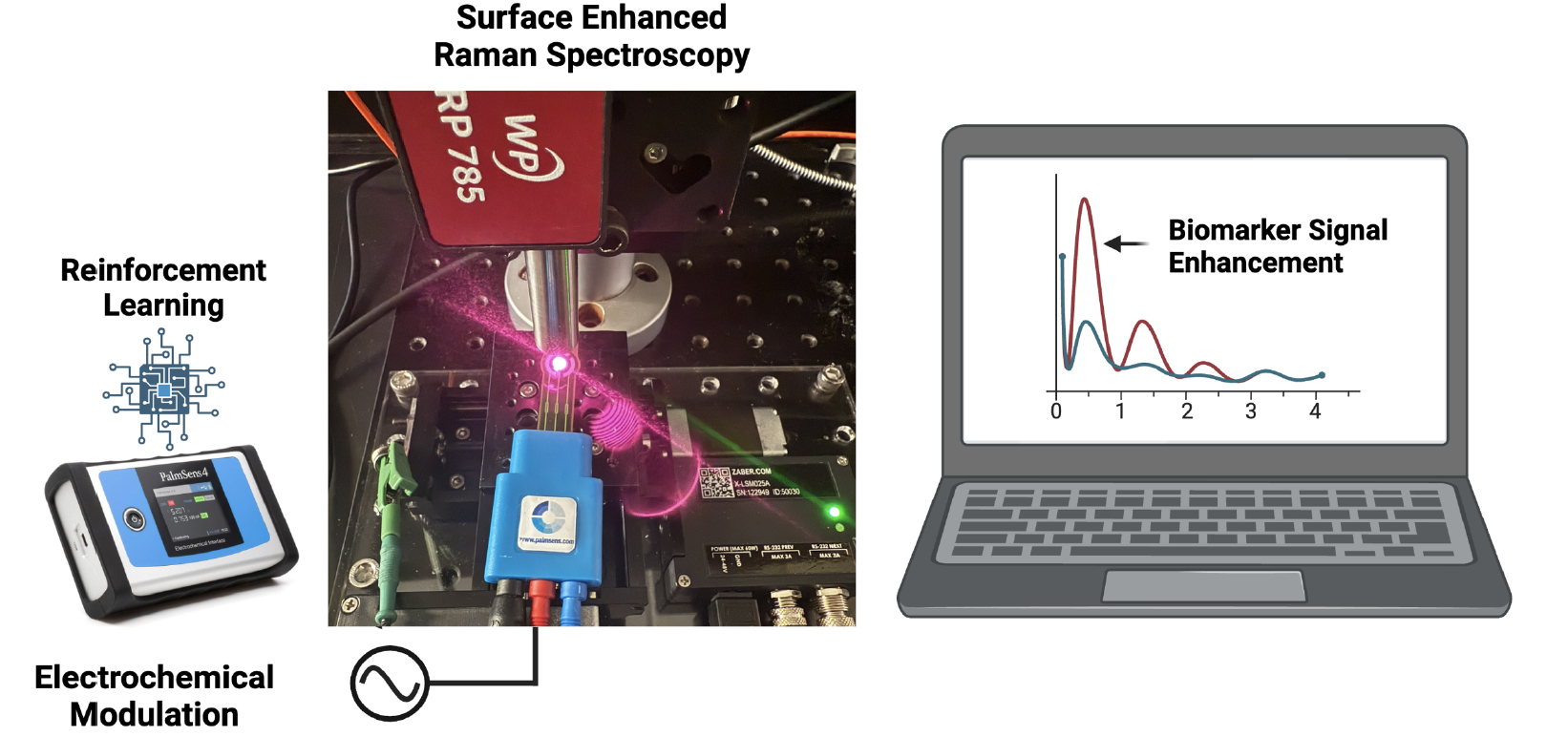
DART- Metabolite Detection Prototype (Image courtesy the Durmus Lab)
Unlike conventional approaches, the DART-platform's adaptive AI dynamically adjusts parameters like voltage and frequency, optimizing signal while reducing substrate damage and noise. This ensures highly sensitive, reproducible, specific detection of multiple biomarkers essential for early and accurate disease diagnosis and non-invasive monitoring of treatment response, advancing personalized medicine.
Stage of Development - Prototype
Initial DART-Met platform tests detected lactate, a key MASLD/MASH metabolic biomarker. Further research demonstrated the platform's ability to detect multiple liver disease biomarkers under physiological conditions without specific receptors using electrochemical - Raman spectroscopy (EC-SERS).
Applications
- Point-of-Care Diagnostics – Portable EC-SERS-based kits for rapid, real time GLP-1 therapy monitoring, liver and metabolic disease assessments.
- Research Instrumentation – High-precision EC-SERS tools for biomarker discovery, drug metabolism studies, and adaptive AI-driven sensing.
- Specialized Clinical Monitoring – Advanced diagnostic tools for specialist hepatology clinics.
- Industrial and Environmental Applications – Real-time biomarker and contaminant detection for food safety, pharmaceutical quality control, and environmental monitoring for regulatory standards compliance.
Advantages
- High sensitivity, reliable, repeatable, precise, and accurate (> 90%)
- Receptor-free biomarker detection
- Selective pre-concentration
- Multiplexed detection and multi-biomarker detection
- Portable, compact, versatile, and easily scalable
- Non-invasive
- Real time optimization
- Lower cost than competing technologies
Related Links
Similar Technologies
-
Engineering the Gut Microbiome for Imaging and Therapeutic Uses S14-452Engineering the Gut Microbiome for Imaging and Therapeutic Uses
-
Light sheet fluorescence microscopy using high speed structured and pivoting illumination S16-332Light sheet fluorescence microscopy using high speed structured and pivoting illumination
-
Breakthrough Optical Frequency Processing for Quantum Computing and Beyond S24-365Breakthrough Optical Frequency Processing for Quantum Computing and Beyond