Docket #: S15-461
A micro-fabricated chemical gas sensor for detection of volatile pollutants and explosives
Stanford researchers have designed and tested an electrochemical gas sensor which can detect volatile organic species in the gas phase and differentiate multiple species with a single chip. Selective detection is achieved due to the unique redox potential of chemical species.
The ability to perform galvanostatic measurements when the electrodes are exposed to volatile organic species dispersed in a gas phase allows their detection and identification as they are oxidized and/or reduced at a specific applied voltage. By varying the material of the electrodes, specific species can be targeted. The selection of the electrode material is made on physico- chemical or electrocatalytic criteria.
Figure
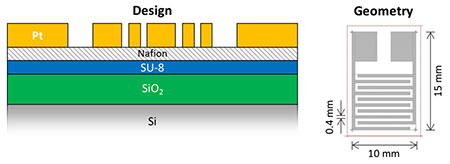
Figure description - Sensor design and geometry
Stage of Research
Applications
- Gas sensors
Advantages
- Detects volatile organic species in the gas phase
- Can differentiate multiple species with a single chip
- High selectivity and ability to precisely identify the species present in the environment
- Can be mass produced with form factor at the millimeter scale
- Uses Nafion polymer in micro-fabrication process
- Integrated reference electrode will considerably improve in the identification of the detected species
- Benefits from electrocatalytic research on materials for the choice of electrodes
Publications
Related Links
Patents
- Published Application: 20170199147
- Issued: 10,261,046 (USA)
Similar Technologies
-
Facilitating the controlled growth of catalysts and dielectrics on graphene surfaces S13-291Facilitating the controlled growth of catalysts and dielectrics on graphene surfaces
-
Infrared Spectroscopy of Carbon Dioxide Hydration S21-245Infrared Spectroscopy of Carbon Dioxide Hydration
-
Bamboo-like Carbon Nanofibers for Flexible Supercapacitors S15-096Bamboo-like Carbon Nanofibers for Flexible Supercapacitors