Docket #: S24-231
Nerve Decompression Brace: A New and Affordable Solution for Repetitive Strain Injuries
Stanford scientists have developed a novel Nerve Decompression Brace capable of decompressing mild nerve compressions, which relieves forearm pain, numbness, and tingling symptoms associated with repetitive strain injuries.
Conventional treatments (e.g. surgical release, nerve stimulation, physical therapy, or the application of elastic skin tape) often entail a high cost, require professional application, or pose potential risks and side effects, such as skin irritation and rashes.
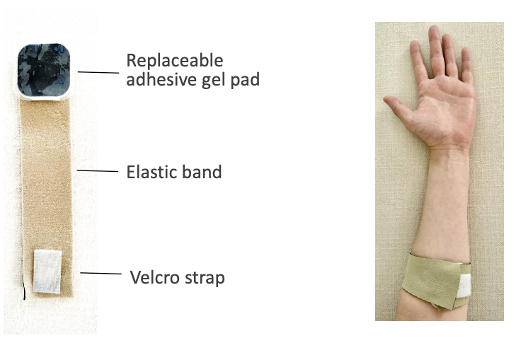
The brace consists of a replaceable adhesive gel pad, an elastic band, and a Velcro strap. The gel pad is placed on the skin at the site of nerve compression and the brace is secured around the forearm. It offers a more cost-effective, efficient, and non-operative solution compared to traditional methods.
Stage of Development
- Prototype
Applications
- Alleviating pain and discomfort associated with peripheral nerve disorders
- Mitigating symptoms of occupational or repetitive strain injuries
Advantages
- Cost-effective compared to competing products
- Non-operative, thus reducing potential risks associated with surgical procedures
- User-friendly application with replaceable components
Related Links
Similar Technologies
-
A Device to Control Peripheral Nervous Tissue Containing Light-Gated Channels S08-033A Device to Control Peripheral Nervous Tissue Containing Light-Gated Channels
-
Algorithmic framework for enhanced artificial sight S18-465Algorithmic framework for enhanced artificial sight
-
Online brain machine-interface auto-delete based on motor cortical activity S15-182Online brain machine-interface auto-delete based on motor cortical activity