Docket #: S17-102
Re-purposed combination therapies to improve outcomes in melanoma
Melanoma is responsible for a disproportionate number of cancer deaths, with few effective treatment options for patients with advanced disease. Further, melanoma is prone to spontaneous mutation in response to treatment with a targeted therapy, such as a MEK or BRAF inhibitor, necessitating additional treatment courses.
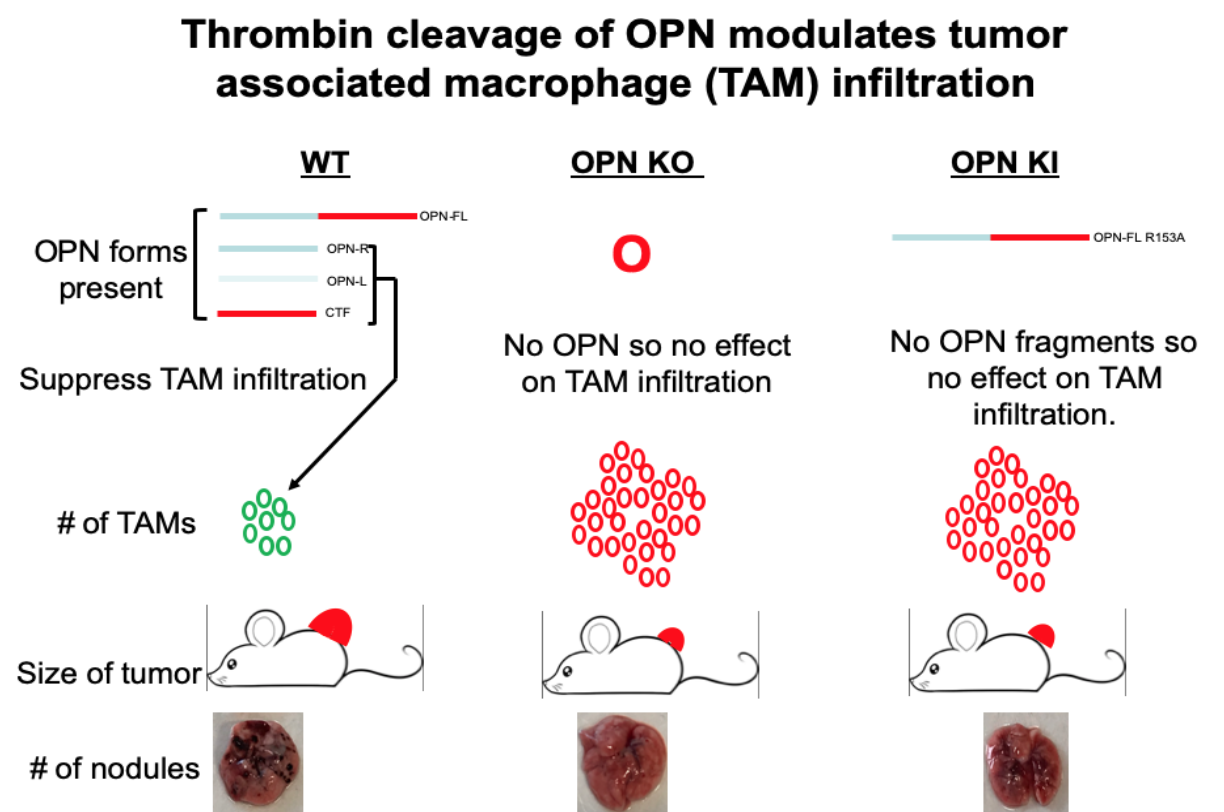
Researchers at Stanford have found that tumors with mutations in the protein osteopontin have improved outcomes- particularly if that mutation renders the protein resistant to cleavage by thrombin. The anti-cancer effect of the mutation can be replicated via treatment with a thrombin inhibitor, demonstrating the importance of the thrombin-osteopontin cleavage interaction in cancer progression. Researchers show that mouse models of melanoma treated with a direct-acting thrombin inhibitor have reduced tumor volume and fewer tumor nodules. That result also applied to a mouse model of ovarian cancer, suggesting broader impact of the thrombin/osteopontin target.
Applications
- Combination cancer therapy
- Melanoma treatment
Advantages
- Novel use of existing therapeutics
- Faster clinical development timeline
- Improved outcomes in melanoma
Patents
- Published Application: WO2022026398
- Published Application: 20230255948
- Issued: 12,605,371 (USA)
Similar Technologies
-
Personalized Cancer Treatment with Topoisomerase Inhibitors S13-187Personalized Cancer Treatment with Topoisomerase Inhibitors
-
Using human cathepsins as therapeutic degraders of pathological mucins S23-393Using human cathepsins as therapeutic degraders of pathological mucins
-
Myc degradation by long non coding RNA for cancer therapeutics S22-163Myc degradation by long non coding RNA for cancer therapeutics