Docket #: S24-135
Enhancing Heart Transplants with an Affordable "Any Size Fits All" Novel Ex-Vivo Perfusion System
Stanford scientists have developed a novel cardiac Ex-vivo Preservation System (EVPS) capable of maintaining hearts of any size warm and beating upon transport, expanding heart transplant options for pediatric populations.
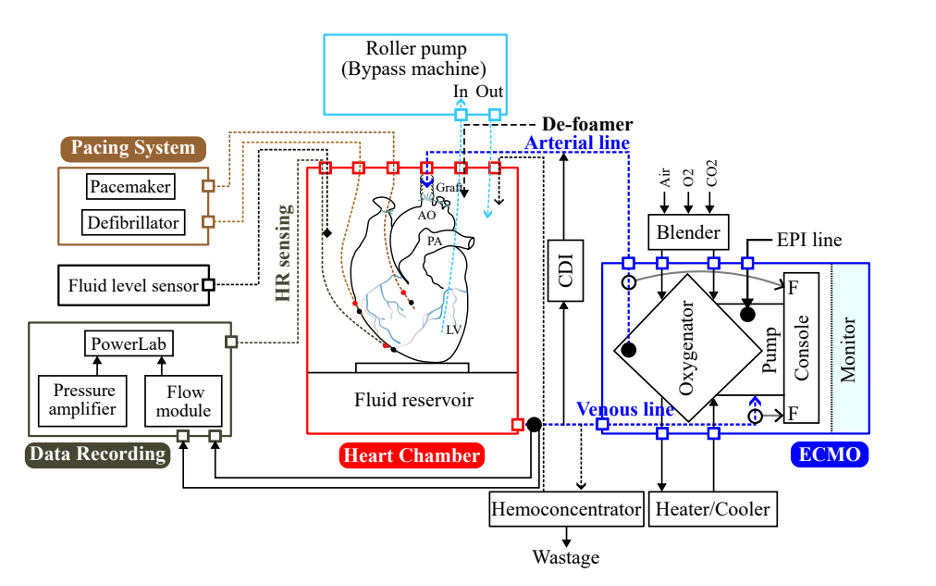
EVPS (Ex-Vivo Perfusion Systems) have addressed a critical unmet need in the organ shortage problem for transplants. Compared to cold storage (keeping an organ on ice in a cooler) EVPS offers constant warm perfusion of solutions that can preserve the organ for longer, administer therapeutics, and monitor functionality in real time. However, current systems are limited for adult populations and a system that can support pediatric hearts has not been approved. Stanford researchers have built a novel EVPS that is both age and size agnostic and leverages pre-existing circuits to reduce cost and increase access. This device can lead to enhanced outcomes for patients on the transplant waitlist for both pediatric and adult populations.
Figure
Stage of Development
- Prototype
Applications
- Pediatric and adult cardiac EVPS
- Donor organ monitoring
- Ex Vivo organ treatment
- Expansion to Liver or Kidney of any size
Advantages
- Any size fits all
- Age agonistic
- Organ monitoring and treatment abilities
- ECMO compatible
- Land or air transportation friendly
- Cheaper than other OCS devices
Publications
- Sharir, A. et al. Novel Pediatric Ex-Vivo Preservation System for Low-Weight Donor Hearts in a Porcine Model. The Journal of Heart and Lung Transplantation, Volume 43, Issue 4, S251 - S252.
Related Links
Patents
- Published Application: WO2025213152
Similar Technologies
-
Primate Model and Magnesium Clock Mechanism for Cardiac Pacemaker Research and Arrhythmia Drug Discovery S25-149Primate Model and Magnesium Clock Mechanism for Cardiac Pacemaker Research and Arrhythmia Drug Discovery
-
Modular Bioprosthetic Valve design to support customized number of leaflets S21-372Modular Bioprosthetic Valve design to support customized number of leaflets
-
An Adjustable Aortic Annuloplasty Ring for Symmetric Aortic Annulus Reduction S20-476An Adjustable Aortic Annuloplasty Ring for Symmetric Aortic Annulus Reduction